
Vehicle verification in India has moved beyond checking basic registration details. As digital lending, insurance, mobility, and fleet operations grow, businesses need a deeper understanding of vehicle compliance and usage. A vehicle may be legally registered, yet still carry unpaid fines or a history of repeated violations. Ignoring this data can lead to financial, legal, and operational risk.
This is why the Challan Detail API has become an essential component of modern vehicle verification in India. It adds a compliance layer that traditional verification methods often miss, helping businesses make safer and more informed decisions.
The Changing Landscape of Vehicle Verification
Earlier, vehicle verification focused mainly on RC details such as owner name, registration status, and vehicle type. While this information confirms ownership, it does not reflect how the vehicle is actually used on the road.
Today, businesses need to assess risk, compliance, and behavior. Insurance companies evaluate driving patterns, lenders assess asset quality, and mobility platforms prioritize safety. Without challan data, these assessments remain incomplete.
Vehicle verification now requires insight into traffic violations, unpaid fines, and regulatory compliance. Challan checks provide this missing context.
What Is a Challan Detail API?
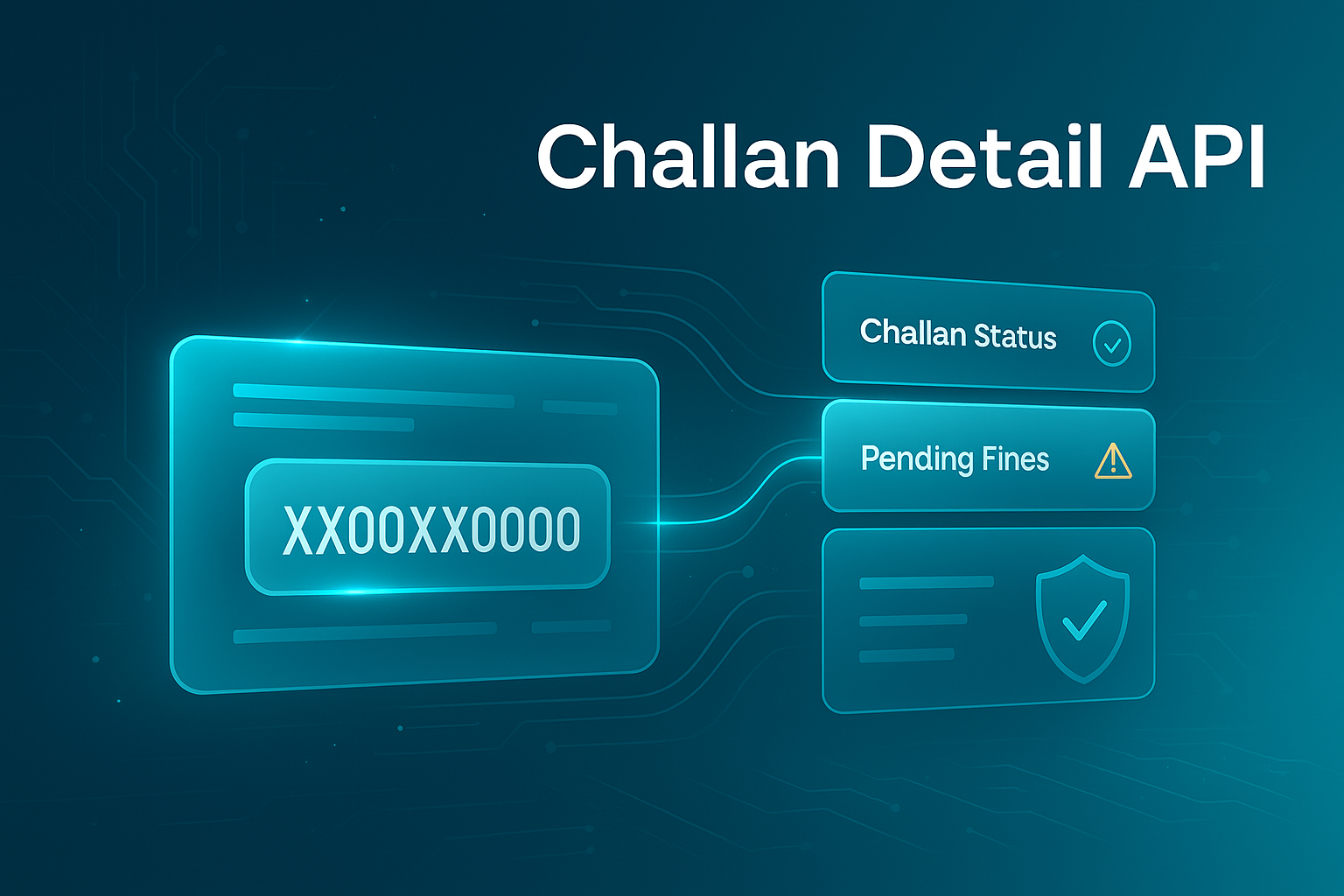
A Challan Detail API is a digital service that allows systems to retrieve traffic violation records linked to a vehicle number. It typically returns details such as pending or paid challans, offence type, fine amount, issuing authority, and violation date.
Instead of manually checking multiple government portals or relying on seller disclosures, businesses can fetch challan information instantly through an API. This makes verification faster, consistent, and scalable across large volumes of vehicles.
Why Challan Data Matters for Vehicle Verification
Challan history reflects real-world vehicle behavior. Repeated violations may indicate unsafe driving, misuse, or poor maintenance. Unpaid challans can create legal issues for new owners or financial exposure for businesses linked to the vehicle.
For insurers, challan data supports better risk assessment. For lenders, it signals asset care and borrower responsibility. For mobility and fleet operators, it directly impacts safety and compliance.
Without challan checks, vehicle verification remains surface-level and risk-blind.
Limitations of Traditional Verification Methods
Many verification processes still rely only on RC data or manual challan checks. These methods have clear limitations.
RC verification confirms identity, not compliance. Manual challan checks are slow, inconsistent, and difficult to audit. They also do not scale as onboarding volumes increase.
In fast-moving sectors such as fintech and mobility, these gaps lead to delayed decisions, missed risks, and operational inefficiency.
How Challan Detail API Strengthens Vehicle Verification
A Challan Detail API adds depth and reliability to verification workflows.
First, it identifies non-compliant vehicles early. Vehicles with unpaid fines or frequent violations can be flagged before onboarding, policy issuance, or loan approval.
Second, it improves fraud detection. In some cases, vehicles with repeated challans are linked to unauthorized use or misrepresentation. Challan data helps uncover these patterns.
Third, it supports accurate risk assessment. When combined with RC data, challan history provides a more complete picture of vehicle behavior and compliance.
Finally, it improves regulatory readiness. Businesses can demonstrate due diligence with clear verification records during audits or reviews.
Industry Use Cases
Insurance Companies
Insurers use challan data to understand driving behavior and compliance risk. Vehicles with repeated violations may require closer review or adjusted pricing. During claims, challan history also adds context that helps validate incidents.
Fintech and Lending Platforms
Vehicle-backed lending depends on asset quality. Challan checks help lenders assess whether a vehicle is responsibly used and maintained, improving underwriting accuracy and portfolio health.
Fleet and Logistics Operators
Fleet managers handle large numbers of vehicles. A Challan Detail API enables centralized monitoring of violations, helping operators clear fines on time and promote safer driving practices.
Mobility and Ride-Hailing Platforms
Safety and trust are critical for mobility platforms. Challan checks help identify high-risk vehicles during onboarding and support ongoing compliance as fleets grow.
Key Benefits of Using a Challan Detail API
Speed is a major advantage. Automated challan checks return results in seconds, keeping verification workflows efficient.
Accuracy improves because data is fetched directly from reliable sources, reducing manual errors and missed violations.
Operational efficiency increases as manual effort is reduced. Teams can focus on decision-making instead of routine checks.
Most importantly, businesses gain proactive risk control. Challan data helps identify issues before they turn into disputes, losses, or compliance problems.
Best Practices for Using Challan Data
Challan checks should be part of a broader verification framework, not a standalone step. Combining RC verification, challan history, and periodic re-checks provides better coverage.
Regular updates are important, as new violations can occur over time. Data security must also be prioritized, with controlled access and minimal storage.
Clear internal policies should define how challan history affects decisions to ensure fairness and consistency.
Conclusion
Vehicle verification in India is no longer complete without challan checks. As compliance requirements rise and vehicle-based businesses scale, understanding how a vehicle behaves on the road is just as important as knowing who owns it.
A Challan Detail API brings this insight into digital workflows. It helps businesses reduce risk, improve compliance, and make informed decisions across insurance, lending, logistics, and mobility operations.
For organizations that depend on vehicles, challan verification is no longer optional. It is a critical foundation for reliable, responsible, and future-ready vehicle verification in India.
Leave a Reply